
How Can I Help?
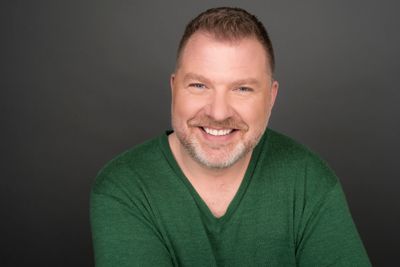
Is my teaching right for you?
Bass and bass-baritone singers make up my entire boutique studio. I focus on these voices specifically.
My studio will appeal to adult singers who want to take their development seriously. I welcome:
- amateur/hobbyist singers who love to sing and want to do it well
- singers who have stepped away and are returning to singing
- singer-songwriters working on their own material or covers
- accomplished voice professionals (teachers, SLPs, voice therapists) who want a knowledgeable, evidence-based colleague they can trust.
The vocal challenges that travel with bass and bass-baritone singers are my lane: their idiosyncratic expressive options, range and range extension in both directions, colour (timbre), traditional theatrical archetype(s), and the pedagogical appraoches that serve basses and bass-baritones in particular.
I work best with the singer who practices between lessons, who is curious about why his voice does what it does, and who is willing to try something that does not work in order to find out what does. None of this requires you to already be good. It requires you to be enrolled and committed to discovery.
A note on language: I may swear a little, and you can, too. This is not to shock or offend. It may be part of how I think out loud in the moment, and it tends to come out when I am dialled in to what you are doing. Likewise, I won't blink when you drop an f-bomb, it's totally fine. If sanitized language your priority in a lesson, I am probably not your match. I am always happy to point you toward one of my excellent colleagues who teach without this particular colouration.
When you are ready, just set up your lesson or coaching in my calendar and follow the easy instructions. I look forward to hearing you!
How it works

What is a "low male voice" (LMV)?
"Low male voice (LMV)" in my studio means either a bass or a bass-baritone. These are voices whose comfortable working range sits below the baritone's. Beginner LMVs may notice that singing along to most current pop music can feel beyond reach, hymns that go up to E4 might not be comfortable, and your warm vocal colour may naturally blend well with others without real effort on your part.
How you arrive at being an LMV is irrelevant to me. I welcome both cis and trans folks, whatever your gender identity is. What matters to me as an LMV specialist is that the range, the tessitura, and the colour of the voice are settled (or settling) into LMV territory so that the work of low-male-voice pedagogy applies to you and helps you to sing better.
If you are not sure whether your voice fits my criteria, I invite you to book time with me and I will give you my honest opinion.
I do not offer separate consultations. When you book a lesson, that 55 minutes is yours: you bought it. You can call it an exploratory lesson if that suits you, but we will do the same work we always do: you sing, I listen, we tackle what comes up, and you leave with a clear idea of what to practice during the week.
A typical lesson
Lessons are 55 minutes. You sing, I listen, and we work together on what comes up. The work might be technical (e.g., registration, breath management, a tricky vowel), it might be musical (e.g., phrasing, dynamics, character work), or it might be assessing why something is not working and troubleshooting with functional exercises and excerpts drawn straight from your repertoire. Most lessons are some mix of these.
I do not require you to bring repertoire to the first lesson, but I welcome it if you have something you want to start with. I will want to get you singing ASAP; I'm truly eager to hear you.
You are welcome to record our sessions for your own review, and I encourage this. You will emerge with a clear idea of what to practice during the week. I might send you follow-up links to texts, performances, or a piece of music we are working on if I feel they can help.
Between lessons
Between lessons, your practice is up to you. When questions come up that will benefit from an answer before our next lesson, just email me. I often reply right away, but I commit to a 24-hour turnaround on weekdays unless I'm indisposed.
Scheduling is straightforward and my online calendar reflects my true availability.
What we each bring
I bring my informed ear, curiosity, care, and experience. I offer you my decades of training and stagecraft as a low male voice. I invest in my continuing education with targeted voice teacher training. I mine current and historical voice pedagogy literature for the things that I think can help. I do not (i.e., cannot) diagnose anything medical; but my network includes medical professionals who handle what falls outside my scope of practice (e.g., ENT, laryngologist, SLP), so if something points toward needing medical intervention, I will share my opinion and connect you if you wish.
You bring your voice, your repertoire of interest, your practice between lessons, and your willingness to try things. If you prefer a backing track, you must provide that for us on your end. FarPlay's low latency is very good, but I'd rather focus on your singing than butcher your piece at the piano. You do not need to bring perfection. You do need to show up willing to explore, every time.
Cancellations
Once you book a lesson online, it is paid in full. Fees are non-refundable. You have bought time on my calendar, and once you've bought it, it's yours. Caveat emptor.
That being said, life happens. Need to reschedule? Just make sure to message me with a heads up. Twenty-four hours notice is ideal, but if you're truly stuck, I sympathize. Try me anyway and very often we can work something out. There's no problem rescheduling you up to three (3) times per calendar year. Your fourth reschedule forfeits the lesson fee. This is not punitive. It is the structure that makes the studio sustainable for both of us.
No-shows forfeit their lesson fee.
Discontinuing lessons
When you decide that working with me is no longer what you need, that is fine. Just stop booking, and that is the end of it. If you want to share why, I will listen. If you do not want to say anything, that is also fine. We have no contract, no commitment past your paid fee(s), and no minimum number of lessons. I value the rich and rewarding ongoing relationships with my students! I also respect your autonomy. Again, I may be able to refer you to a colleague who specializes in your area of interest, so share your thoughts if you feel comfortable doing so.
Russian lyric diction coaching
Singers of any voice type may book a Russian lyric diction coaching, just like a lesson: same 55 minutes, same fee for my time. If you want to do some independent Russian work in advance, I have created a free, open-source browser app called Ilya to help. Ilya gives you instant IPA transcriptions and English/French translations for any Russian Cyrillic text that you enter. It is my gift to you. Download your free copy anytime here. Use it and share Ilya with my enthusiastic blessing.
ABOUT DANN
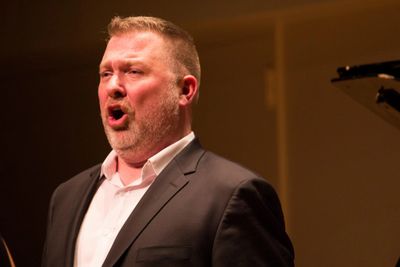
In good hands
I teach voice, I research it, I write about it, and I edit prose about the issues that touch singing. My fully online studio is based in Toronto, Canada. Low-latency connection expands my reach to anywhere on the planet with a stable internet connection. My current students live across Canada, the United States, and Europe. I use FarPlay to enable sessions: it's fast. At its most basic, all FarPlay requires from you is my access link and your own device with its onboard camera and mic.
The DMA on my wall comes from the University of Toronto (2020), in Performance (Voice) with a specialization in voice pedagogy. My dissertation tests how sung Russian suits low male voices. Singers of any voice type are welcome for Russian lyric diction coaching. Everyone is invited to download the free open-source app I built, Ilya, to create instant IPA transcriptions of Russian song texts. This is my gift to you and I hope you use it to great effect as you prepare Russian vocal repertoire.
The Journal of Singing has published my work, including my 2022 article "Habilitation for the Aging Avocational Singer," which has become a standing reference in its area. I lectured on cannabis use and the singing voice for the Voice Study Centre UK in September 2025. I serve on the Advisory Board of the International Voice Teachers of Mix (IVTOM) and on the Editorial Board of The Voice and Speech Review (VSR), the journal of VASTA.
The New Forum for Professional Voice Teachers (NFPVT) is a Facebook peer community I founded and continue to co-moderate. I also stay current with the field through ongoing attendance at the Acoustic Voice Pedagogy Workshop (AVPW), the International Physiology and Acoustics of Singing conference (PAS), the Pan-American Vocology Association (PAVA) Symposia, and the International Congress of Voice Teachers (ICVT). This work informs my studio practice and my scholarship.
Editorial work for colleagues runs alongside my studio practice. Recent projects include Ian Howell's Hearing Singing (Rowman & Littlefield, 2025), Kathleen Bell's 2025 dissertation, Katrina Sheppeard's 2024 master's thesis, and a 2023 Journal of Singing article by González Redman and collaborators.
Before teaching
I have retired as a professional singer. For twenty-five years, I sang professionally as a classical bass. My professional roles include Angelotti, Don Alfonso, Bartolo, Rossini's Basilio, the Commendatore, Gurnemanz, Hard Boiled Herman, Masetto, the Narrator in Britten's Paul Bunyan, Sarastro, Sparafucile, and Zaccaria. Concert repertoire spans the Fauré Requiem with the Toronto Mendelssohn Choir and a range of oratorio, lieder, mélodie, and Russian art song. I am a proud two-time alumnus of the Tanglewood Music Center. I also enjoyed fellowships at the Aspen Music Festival, the Britten-Pears Young Artists Programme at Aldeburgh, Jane Eaglen's Wagner Intensive, Richard Margison's Highlands Opera Studio, and Dolora Zajick's Institute for Young Dramatic Voices (the American Wagner Project). What I learned on these stages supports the lessons I teach.
At home
I am a Maritimer, born and raised in Moncton, New Brunswick. My husband Bob and I share our home with a pair of fluffy, delightful Bernese Mountain Dogs: Rory (age 5) is our girl, and Anson (age 4) is our boy. We are a musical household, and while our Berners have not yet learned to harmonize, we're sure it's only a matter of time. I mean, it's just singing. How hard can it be?
Off the Shelf
Austin: Provenance (2017)
Austin: Provenance (2017)

This book is a conveniently bound compendium of Austin's fifty-nine columns published in the Journal of Singing between 2004 and 2016. NATS members can locate each of these articles for free through the Journal of Singing index, but the book assembles them in one place. Topics span legato, articulation, register unification, acoustics, onsets, and breath economy, with extended profiles of historical pedagogues including Bassini, Garcia, Klein, Lamperti, Root, and Stockhausen. Each entry is meticulously endnoted. Austin has a gift for rescuing useful ideas, and Provenance works like a friendly access point to sometimes obscure writings that might otherwise have remained buried in old journals.
Bozeman: Practical Vocal Acoustics (2013)
Austin: Provenance (2017)
Probably the single most accessible print resource on vocal acoustics for singers. Bozeman explains harmonics, formants (vocal tract resonances), and their interactions with patience and clarity. Of particular interest to LMVs is his discussion of acoustic turning ("the lower, heavier, or deeper the voice type, the more noticeable the turn") and his chart of bass acoustic turning events per vowel. The chapter comparing convergent and divergent resonator shapes reframes the open-throat ideal in acoustic terms, which clarifies a foundational difference between the mechanics behind classical singing and belt. The second edition contains important corrections and expansions.
Bozeman: Kinesthetic Voice Pedagogy 2 (2021)
Bozeman: Kinesthetic Voice Pedagogy 2 (2021)
Not to be confused with the second edition of *Practical Vocal Acoustics*, KVP2 is its studio-application companion. PVA explains the science, KVP explains how we use it in lessons. Bozeman revisits acoustic registration with the assertion that teachers need to know how to stimulate vocal tract behaviours that current research shows to be favourable. His treatment of somatic remapping is particularly useful, including the delightfully counterintuitive observation that [i] is the least obstructed of all vowels. Chapter 6 directly addresses bass passaggio events with an updated version of the earlier chart that appears in PVA. This is a book for the working teacher.
Brunssen: The Evolving Singing Voice (2018)
Bozeman: Kinesthetic Voice Pedagogy 2 (2021)
Brunssen treats the singing voice across the full lifespan, from childhood through senescence. The book's strength is Brunssen's refusal to flatten the developmental arc into generic technical advice. Different voices at different stages need different things. Of particular value for studios serving aging singers is the chapter "The Senescent Singer," co-written with Aaron Johnson, which catalogues the specific challenges facing older voices and points toward the literature that addresses them. Also the chapter that discusses Pacinian corpuscles (co-written by Chadley Ballantyne) is worth a look. A foundational text for any teacher whose students span more than a single decade of life.
Chapman: Singing and Teaching Singing (2017)
Chapman writes from inside her own studio, which is the book's strength. She is best known for her use of "primal sounds": pre-verbal vocal gestures (laughter, sobbing, calling, wailing) that bypass technical self-consciousness and recruit the body in a coordinated phonation. The book offers this work, and also her famous Dial-a-Vowel exercise, where protruding the tongue and allowing it to spring back to a fronted baseline establishes the "sweet spot" for resonant singing. Chapman's writing is enriched by contributions from speech-language pathology, voice medicine, and Alexander Technique. Practical throughout.
Coffin: Historical Vocal Pedagogy Classics (1989)
This book was posthumously published by Mrs. Coffin. Coffin summarizes and reviews eighteen voice pedagogy texts from a pantheon of historical pedagogues including Tosi, Garcia père et fils, Marchesi, Lamperti, de Reszke, and Lehmann, several of which are now out of print. Eleven appendices cover additional singing-related topics. The essay "Delle Sedie's Modifications of the French A in the Modulated Voice of Singing" is a fine entry point into Coffin's larger writings on vowels. A useful timesaver, this curation of the historical literature is for the committed but reasonable reader who wants the major lineages without having to track down every primary source.
Doscher: The Functional Unity of the Singing Voice (1994)
Doscher's foundational text is one of the touchstones of late twentieth-century voice pedagogy. She walks systematically through respiration, laryngeal anatomy, phonation, posture, acoustics, and registration before linking these elements in a closing chapter on their functional unity. Two appendices on voice use and hygiene could easily have stood as chapters of their own. LMVs receive brief but specific attention: Doscher names the morphological features common to basses and low baritones (long necks, lip-pursing on the lowest notes) and warns against carrying heavy mechanism too high in the range, which she argues will measurably shorten a voice's life. (Can confirm.)
Hines: Great Singers on Great Singing (1982)
Hines was a great bass at the Metropolitan Opera for over forty years. His book is a primary source for working singers. He interviews his contemporaries, including Domingo, Pavarotti, Sutherland, Sills, Milnes, Plishka, and a handful of celebrated baritones, alongside an ENT specialist and a speech-language pathologist. The interviewees contradict each other. This is part of the book's value. Each great singer reports how they thought they made their sound, and the discrepancies are themselves instructive. The interview with Leo P. Reckford offers a snapshot of vocology in its early days. Anecdotal, opinionated, and as entertaining as it is indispensable.
Howell: Hearing Singing (2025)
Howell: Hearing Singing (2025)
Howell proposes a conceptual framework for understanding sung timbre that gives the trained listener new perceptual categories: multiple missing fundamentals, local spectral coherence, weak tone colour bridging, and the obvious true fundamental. Curious newcomers will learn lots. Howell coins 'absolute spectral tone color [sic]' to describe the vowel-like percepts within certain frequency ranges. The book is a manual for cultivating an informed ear. Read with attention and in concert with the suggested audio examples, it changes what you can hear. Full disclosure: I served as Howell's editor on this volume, which is one of the reasons I can vouch for the care that went into every page. Always happy to recommend this important book.
D. Miller: Resonance in Singing (2008)
R. Miller: National Schools of Singing (1997)
Donald Miller (no relation to Richard) was the developer of the VoceVista voice analysis software, and this book is its pedagogical companion. Miller walks through resonance tuning strategies for TBB and SSA voices and integrates exercises designed to be carried out using VoceVista in real time. The text supports the wider shift in perspective from articulator-based voice pedagogy to acoustic voice pedagogy, and it does so with the patience of someone who knows the technology well enough to teach it. Naming conventions have evolved since its publication, and the discipline's thoughts on formant/harmonic interactions have evolved, but Miller's underlying analysis remains helpful.
R. Miller: National Schools of Singing (1997)
R. Miller: National Schools of Singing (1997)
This book is an expansion of Miller's 1977 paper comparing the classical singing being practiced in England, France, Germany, and Italy. He acknowledges that Slavic and Asian schools of Western-style classical singing exist, but he respects the limits of his own exposure and stays in his lane. Chapter 16 on Baritone and Bass Voices contrasts LMV aesthetics and technical approaches across the four countries, which is rare and useful information for a teacher of LMVs trying to understand why the same role can sound so distinctive when sung by two different LMVs. I came away with the sense that Miller's comparative method invites the reader to ask how language itself shapes vocal aesthetics.
R. Miller: Securing Baritone, Bass-Baritone and Bass Voices (2008)
Twenty-two years after The Structure of Singing, Miller returns to write his final book specifically for low male voices. He addresses chiaroscuro, cover, agility, resonance, and laryngeal position in terms that match what LMVs actually navigate day to day. Chapter 13 on Developing an Individual Tonal Concept centres something that most pedagogy texts gesture at without naming: the bass and bass-baritone voice has aesthetic concerns that differ from the tenor's, and they deserve their own discussion. Miller draws his exercises from targeted LMV repertoire, which means the technical work is firmly grounded in music the student wants (and needs) to prepare.
R. Miller: Solutions for Singers (2004)
Offered in an engaging Q'n'A format like an advice column, Miller distills over 1,500 questions fielded in his master classes and courses. The format makes the book genuinely useful as a working reference: when something specific comes up in the studio, you can look it up directly. Chapter 4 on Resonance Balancing captures Miller's pre-Bozeman approach to applied vocal acoustics and vowel modification. Chapter 7 on Registration addresses LMV concerns directly in several sections. The grateful reader appreciates that this book reads less systematically than *The Structure of Singing*. I confide that it often seems the more practical of the two.
R. Miller: The Structure of Singing: (1986)
Miller's landmark twentieth-century resource may be one of the most widely-cited books in North American voice pedagogy circles. Miller walks systematically through every element of vocal technique with an attention to the acoustic and physiological evidence that was, in 1986, ahead of where most studios were operating. Chapter 9 on Unifying the Registers of Male Voices is highly relevant to the LMV. Most North American voice teachers working today learned from this book, directly or indirectly, even if they have moved on to more recent resources. By now, several generations of teachers have metaphorically cut their teeth on this ubiquitous reference.
Ragan: A Systematic Approach to Voice (2020)
Now in its second edition, Ragan's book offers the studio teacher a structure for sequencing technique drawn from her thirty-five years of teaching across classical and CCM genres. The book is grounded in the evidence-based voice pedagogy framework (EBVP) that Ragan continues to develop. This framework integrates voice research, teacher expertise, and the individual singer's goals. Five chapters follow the familiar divisions of the singing system (respiration, phonation, registration, articulation, resonance), each closing with a Selected Resources section that points the reader toward further reading. Ragan's treatment of semi-occluded vocal tract exercises in Chapter 4 is the clearest gathering of this material I have encountered. She profiles peripheral tools for the studio (straws, self-massage, therabands, etc.), a survey I had not seen curated elsewhere.
Reid: Voice: Psyche and Soma (1975)
Sauerland: Queering Vocal Pedagogy (2022)
Sauerland: Queering Vocal Pedagogy (2022)
The closing volume of Reid's trilogy preceded by *The Free Voice: A Guide to Natural Singing* (1965) and *Bel Canto: Principles and Practices* (1950), which all reflect more or less the same content. Its central concern is the integration of interpretive gesture with the body's action, which makes VPS the most psychologically attentive of the three books. Thirteen chapters cover anatomy, registration, vowel theory, functional exercises, breath, vibrato, and functional studies. Of note, Reid invokes Husson's neurochronaxic theory at one point, which has since been disproven. Readers should be aware without discounting the book's conceptual value. The sequence Reid offers for technical restructuring (registration, then laryngeal suspension, then breathing integrated with emotional affect) remains useful guidance for teachers thinking about how to build the singing voice.
Sauerland: Queering Vocal Pedagogy (2022)
Sauerland: Queering Vocal Pedagogy (2022)
Sauerland: Queering Vocal Pedagogy (2022)
It is my opinion that Sauerland's attractive book should be required reading for all voice teachers. Sauerland gives the field something it badly needed: a working pedagogy for teaching trans and genderqueer singers that does not treat gender-affirming voice work as a specialty practice separate from voice pedagogy proper. This is how I feel about integrating trans singers in my studio. Sauerland's framing is generous to teachers who are encountering this material for the first time without diluting the rigour the work demands. Vocabulary is suggested. A necessary text for any studio that intends to welcome the singers it claims to welcome.
Smith: The Naked Voice (2007)
Sauerland: Queering Vocal Pedagogy (2022)
Smith: The Naked Voice (2007)
This may be the most novel organization of a voice pedagogy text I am aware of because it rolls out as 'inventions' (think Bach). Where 'holistic' gestures at integration, 'wholistic' for Smith means working from the singer's whole self as the irreducible starting point. Part I addresses speaking as the original creative act before introducing breath economy. Part II offers six structured vocal exercises for chiaroscuro balance, vowel definition, flexibility, and range extension. Part III applies the framework to repertoire and to building a career while continuing to sing well. Embedded references to online audio clips support the written instruction.
Stark: Bel Canto (1999)
Vennard: Singing: The Mechanism and the Technic (1967)
Smith: The Naked Voice (2007)
Stark curates a history of voice pedagogy from the early sixteenth century through the heyday of bel canto practice, with Manuel Garcia II as the touchstone against which other pedagogues are introduced and discussed. The book covers historical practices and attitudes on onsets, chiaroscuro, registration, breath economy, vibrato, and affect. Stark closes with thirty pages of laboratory measurements he underwent himself as the single informant in an effort to quantify the phenomena under discussion. Erna Brand-Seltei's extension of bel canto into Russian national opera receives a passing mention that I think is worth following up. Scrupulously researched and unassailably cited.
Vennard: Singing: The Mechanism and the Technic (1967)
Vennard: Singing: The Mechanism and the Technic (1967)
Vennard: Singing: The Mechanism and the Technic (1967)
Vennard's mid-twentieth-century treatise is one of the first voice pedagogy texts to include modern anatomical drawings, conceptual illustrations, and screen captures of spectrograms. Hoch identifies Vennard's 1967 expansion as one of two volumes (with Appelman's *The Science of Vocal Pedagogy*, also 1967) that ushered in the fact-based era of voice pedagogy. Chapter 7 on Articulation contains a quaint value judgment on Unworthy Texts and an interesting passage on The Relative Merits of the Languages, which can inform consideration of sung Russian. Foundational, dated in places, a treasure trove of underdeveloped ideas for the modern grad student to pursue, even as they struggle with its idiosyncratic typesetting.